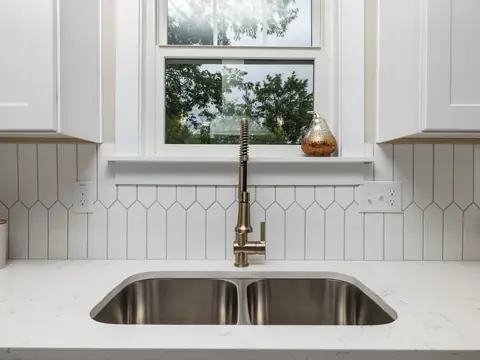
A reverse osmosis system treats the water you drink and cook with, at one tap. It sits under the kitchen sink with its own faucet on the counter. This page explains how a reverse osmosis system works, what the EPA says it can remove, what it costs in water rather than dollars, and what to ask before one is fitted in an Omaha kitchen.
Water Softener Omaha is an independent referral service, not an installer or plumber. When you send the form, your details are passed to an independent local water treatment pro, who can contact you and quote the work. Asking is free and you never have to buy.
How reverse osmosis works
The EPA’s WaterSense program describes reverse osmosis as the process by which pressure forces water through a semi-permeable membrane. Water that passes through the membrane is the treated water, which the EPA calls permeate. Water that does not pass carries away what the membrane held back and goes to the drain; the EPA calls it concentrate or brine. A point-of-use system is connected to a single fixture, such as the kitchen sink.
An under-sink system is more than the membrane. Units are sold with pre-filters ahead of the membrane, a storage tank or a tankless design, a post-filter and a separate faucet, and the arrangement varies by maker. Ask the pro to show you each stage of the unit being quoted and what it is there for.
What RO can remove
The EPA says reverse osmosis systems can potentially remove water contaminants such as lead, volatile organic compounds (VOCs), PFAS, arsenic, bacteria and viruses. Note the word potentially. What a particular unit removes depends on the unit and on its certification, which is why the standard matters.
NSF/ANSI 58 is the standard for reverse osmosis drinking water treatment systems. When a unit is quoted, ask whether it is certified to NSF/ANSI 58 and for which contaminants. Texas’s environmental agency, in its general buyer advice, puts it this way: make sure the unit you are considering is certified to remove the contaminant you are concerned about.
PFAS: dated status
The EPA’s final rule set enforceable limits of 4.0 parts per trillion for PFOA and for PFOS in public water systems. On May 18, 2026 the EPA proposed keeping those two limits with up to two more years, to 2031, for water systems to comply, and proposed rescinding the limits for PFHxS, PFNA, HFPO-DA (GenX) and the mixture hazard index. These are proposals, not final rules. For M.U.D.’s own results, see what M.U.D. publishes on its website.
The water RO sends down the drain
This is the trade-off to ask about. The EPA says a typical point-of-use RO system will generate five gallons or more of reject water for every gallon of treated water it produces, and that some inefficient units generate up to 10 gallons. Units that earn the EPA’s WaterSense label must send 2.3 gallons or less down the drain for each gallon treated.
So ask two questions about any unit you are quoted: is it WaterSense labeled, and how much water does it send to the drain per gallon treated? The answers matter for your water bill and for how the unit is plumbed, because the drain line is part of every install.

What an under-sink install involves
- A feed connection from the cold water line under the sink.
- A drain connection for the reject water, to the sink drain.
- A faucet on the counter or the sink deck, which may mean a new hole.
- The unit itself, mounted in the cabinet with room to change its filters.
- Optional lines to a refrigerator’s water dispenser or ice maker, if you ask for them.
Before the visit, clear out the cabinet under the sink, note whether there is a free hole in the sink deck and whether a garbage disposal shares the drain, and decide whether you want the refrigerator connected. Ask the installer which licenses and permits the job needs where you live.
Reverse osmosis and a softener together
A softener and an RO unit do different jobs, and some homes have both. The softener treats hardness for the whole house, on the main line. The RO unit treats drinking water at one tap. M.U.D. notes that home softeners add sodium to the water in exchange for the hardness they remove, so people who soften their water sometimes ask whether RO at the kitchen tap is worth adding. That is a question for the installer and, for anything about your diet, your doctor.
If a softener is part of the plan, the page on water softener installation in Omaha covers it, and the broader page on water treatment in Omaha sets out filters, UV and the standards for each.
Reverse osmosis on a private well
Homes around the metro that draw from a private well are in a different position from M.U.D. customers. The EPA says private well owners are responsible for delivering safe drinking water to their households, and that private wells are not regulated by the federal government under the Safe Drinking Water Act. A reverse osmosis unit is not a substitute for testing the well.
Nebraska’s Department of Water, Energy and Environment recommends that private well owners sample once a year, in the spring, for bacteria and nitrates. If coliform bacteria are found, it says water can be boiled for one minute in the short term and that a certified well contractor should inspect the well as soon as possible. If nitrates are high, it warns not to boil the water, because boiling concentrates them. Test first, then talk to a pro about treatment with the result in hand.
Is RO worth it on M.U.D. water?
That depends on what you want from the kitchen tap. M.U.D. lime-softens its water and calls it suitable for all home uses, so an RO unit on city water is a choice about taste, about particular contaminants you want reduced, or about peace of mind, rather than a fix for a known problem. Weigh it against the water sent to the drain and the filter changes the maker calls for, and ask the pro what a test of your tap shows before you decide.
Whole-house reverse osmosis
Some sellers offer reverse osmosis for the whole house. A whole-house RO system is a bigger installation; the installer sizes it after a water test. On M.U.D. water, which the utility already lime-softens and calls suitable for all home uses, ask what problem whole-house RO would solve that a softener or a filter would not, and how much water it would send to the drain.
Want treated drinking water at the kitchen sink? Send the form and a local pro can contact you with a quote.
Looking after an RO unit
An RO unit has filters and a membrane that wear, and each maker sets its own schedule for changing them. Follow it. Keep the manual and a note of when each part was last changed, inside the cabinet door if that helps. If the water flow at the faucet slows, the taste changes or the unit runs to the drain without stopping, ask for a service check. The page on filter and system service covers upkeep for RO units and whole-house filters.


Questions to ask before you buy
- Is the unit certified to NSF/ANSI 58, and for which contaminants?
- Is it WaterSense labeled? How many gallons go to the drain per gallon treated?
- What stages does it have, and what does each do?
- What does the maker say about changing filters and the membrane, and what do the parts cost?
- Does it need a new hole in the counter or sink?
- Which licenses and permits does the job need where I live?
- What test of my water is the recommendation based on?
If you have not tested your water, start there. The page on water testing in Omaha covers M.U.D. water, private wells and certified labs.
Questions people ask
Why buy reverse osmosis water treatment?
To treat drinking water at one tap. The EPA says RO can potentially remove lead, VOCs, PFAS, arsenic, bacteria and viruses; what a given unit removes depends on its certification to NSF/ANSI 58.
Is it safe to drink tap water in Omaha?
This site makes no health claims and does not test water. M.U.D. publishes information on its water on its website.
How much does a reverse osmosis system cost in Omaha?
This site gives no prices. The unit, its stages, the faucet, any refrigerator line and the plumbing shape the quote. Ask also what the replacement filters cost.
How much water does reverse osmosis waste?
The EPA says a typical point-of-use unit sends five gallons or more to the drain per gallon treated, some up to 10. WaterSense labeled units must send 2.3 gallons or less.
Can I have RO and a softener?
Yes. They do different jobs: the softener treats hardness for the whole house and the RO unit treats drinking water at one tap.
Who is this site?
Water Softener Omaha is an independent referral service, not an installer or plumber. When you send the form, your details are passed to an independent local water treatment pro, who can contact you and quote the work.
